
I have a fig tree in my back yard. Actually I have a fig, a peach, a lemon, and two apricot, but for now we’ll focus on the fig. It’s a huge tree and if I don’t pick the figs as soon as they ripen they split open and all kinds of creatures come to feast on them. It’s a smorgasbord for bees, birds, Figeater beetles (those noisy iridescent green ones) and even coyotes. Then the figs fall and make a squishy mess on the ground. I feel bad about this, really I do. So this year I’m making an effort to pick some every day and find something to do with them.
See how pretty they are? Plump and green and speckled white.
When you pick them they ooze sticky white sap. I usually wear gloves.
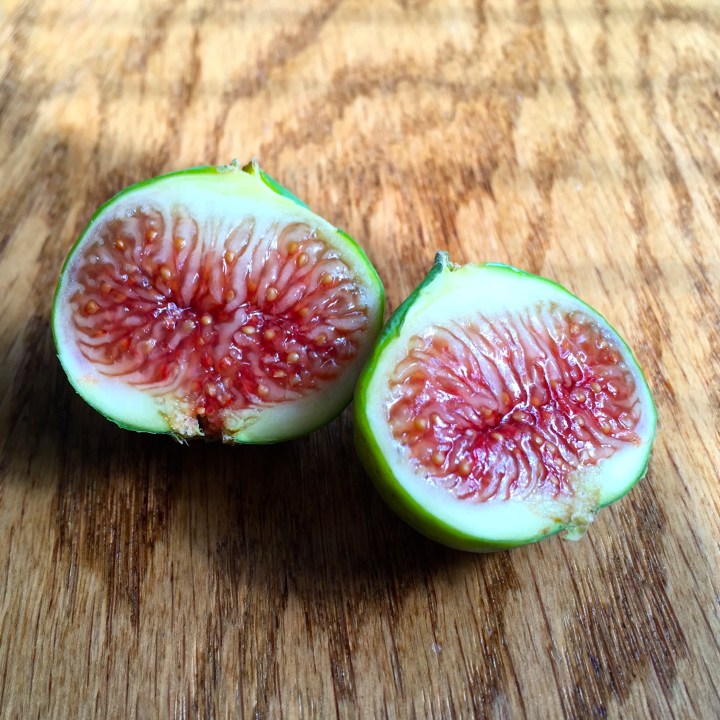
Their flesh inside is a lovely pale pinky-mauve. I managed to pick about 8 cups of figs and knew I wanted to make jam. My grandmother is a longtime jam pro. Like, she used to make huge batches, boiling the jars and lids and pouring melted paraffin over the jam before putting on the lid to seal it (they didn’t have the self-sealing jars back then). So to grandmother’s house I went. When I got there she suggested we make strawberry-fig jam. “Uh, I didn’t bring any strawberries, Grandma. Do you have some?” She smiled knowingly and said, “We don’t need any. We’re using jell-o.”
“Wait, what? Jell-o?” My grandma is the oldest of five kids and got married at eighteen. A year later my mom was born, so my grandma worked two jobs and my grandpa worked three to make ends meet. A lot of her recipes (or my great-grandma’s recipes) are full of cost-cutting shortcuts like that. My great-grandma always used to make tuna and noodle casserole with crushed saltines instead of bread crumbs because they were cheaper and they had a longer pantry life. So jam with jell-o is just another one of my grandma’s thrifty ideas.
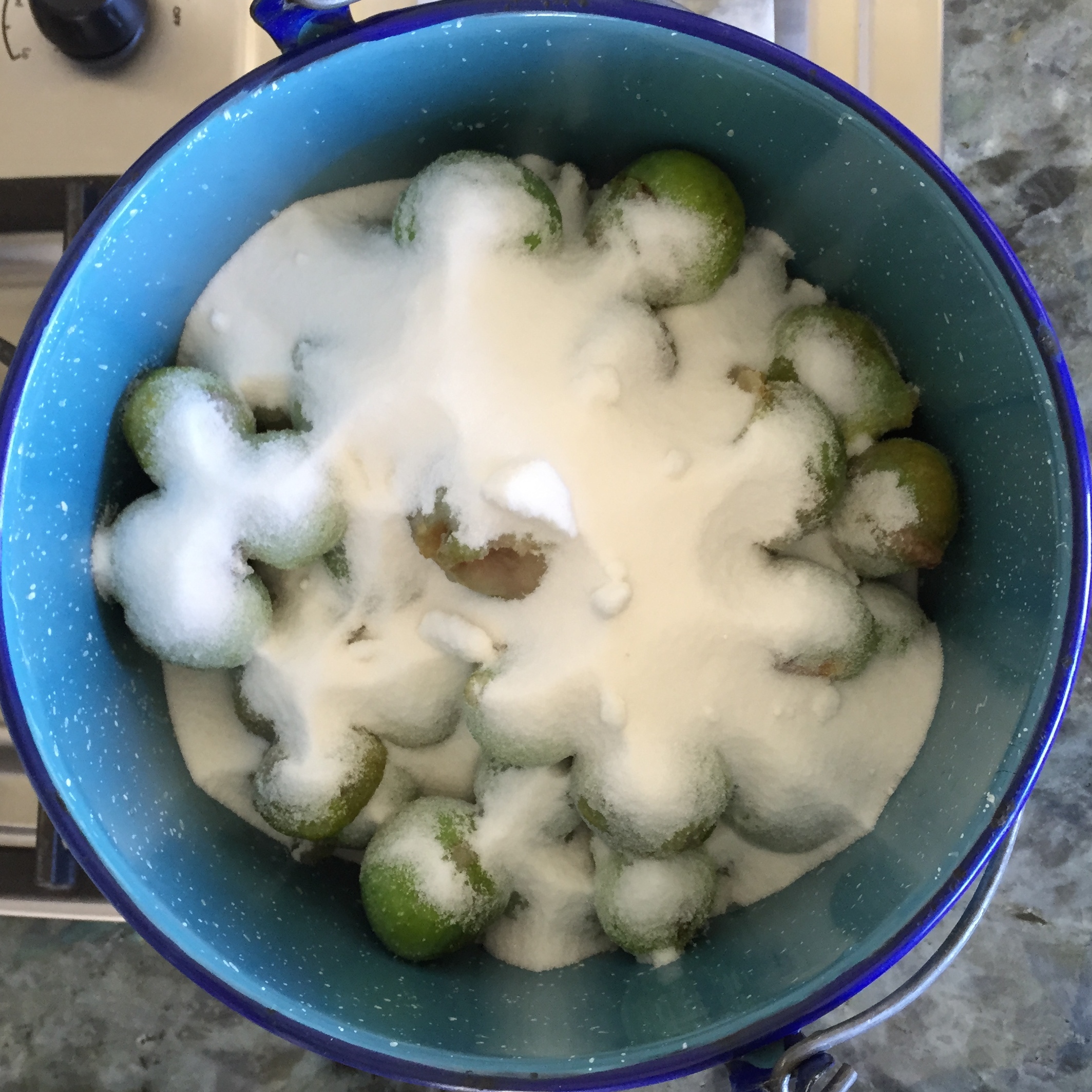
I washed all the sticky sap off the figs (not pictured, did you really need to see that part?) and threw them into this big pot she had. Then I added 4 cups of sugar and turned the stove up to medium.

The sugar dissolved but the figs weren’t breaking down as quickly as I wanted them to. I should’ve cut them in half but I had been too eager to get started.
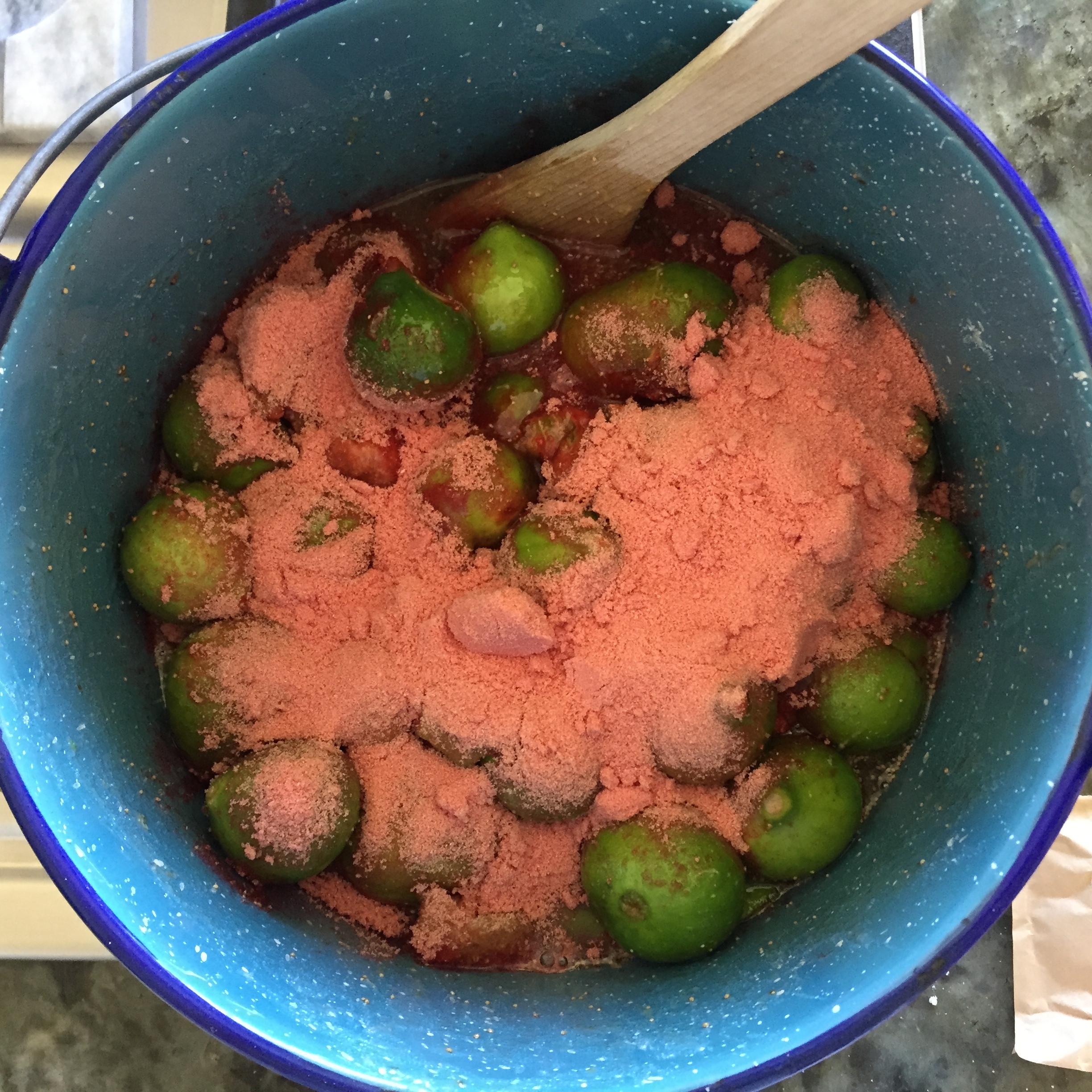
Then went in 2 boxes of strawberry gelatin.
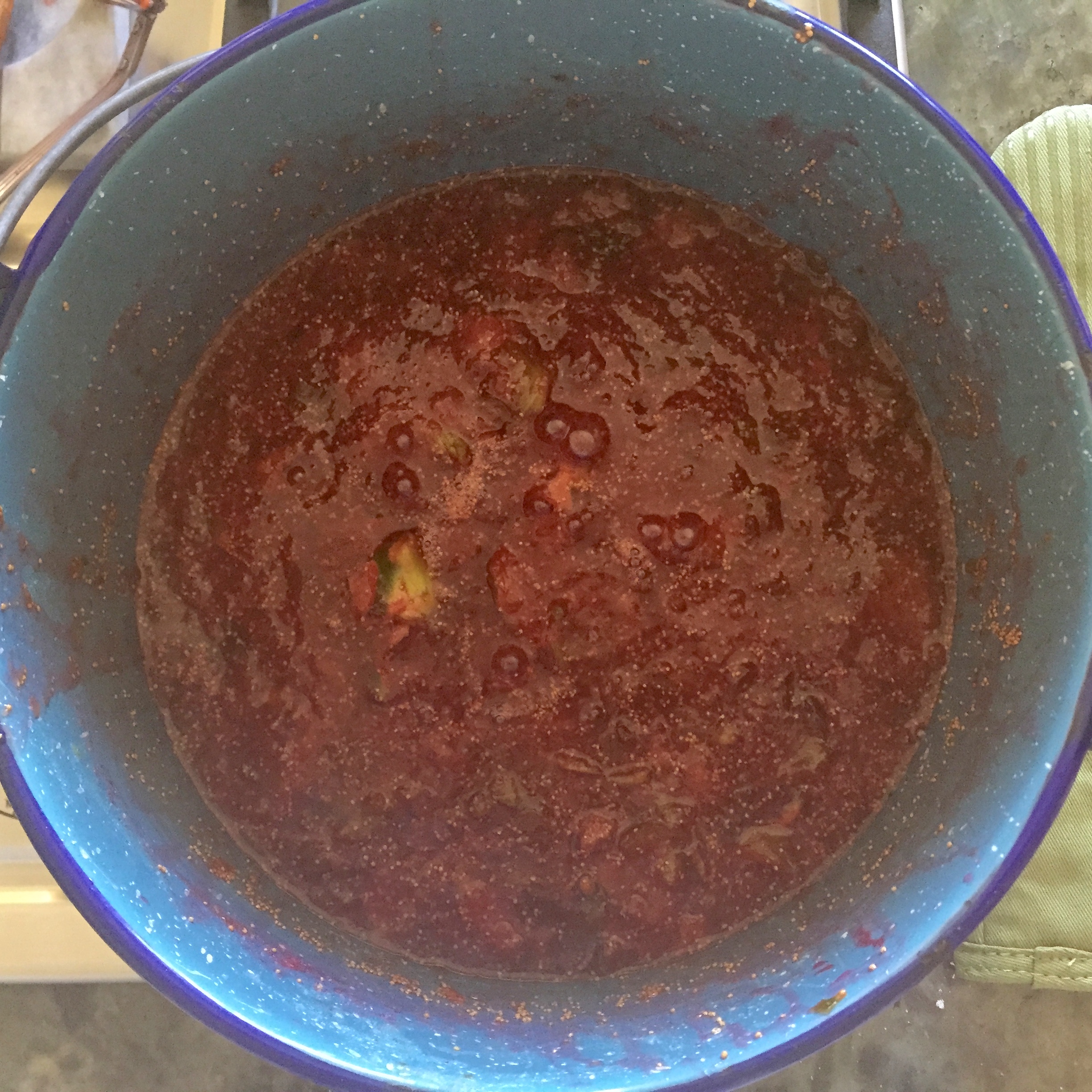
The figs still weren’t breaking down so at first I tried to smash them with a potato masher. But figs are slimy and they kept slipping out from under it. Then my grandma had the brilliant idea to use her hand blender. It worked like a charm and the mixture finally looked like jam. After boiling for about 10 minutes we took it off the heat and poured it into our sterilized jars.
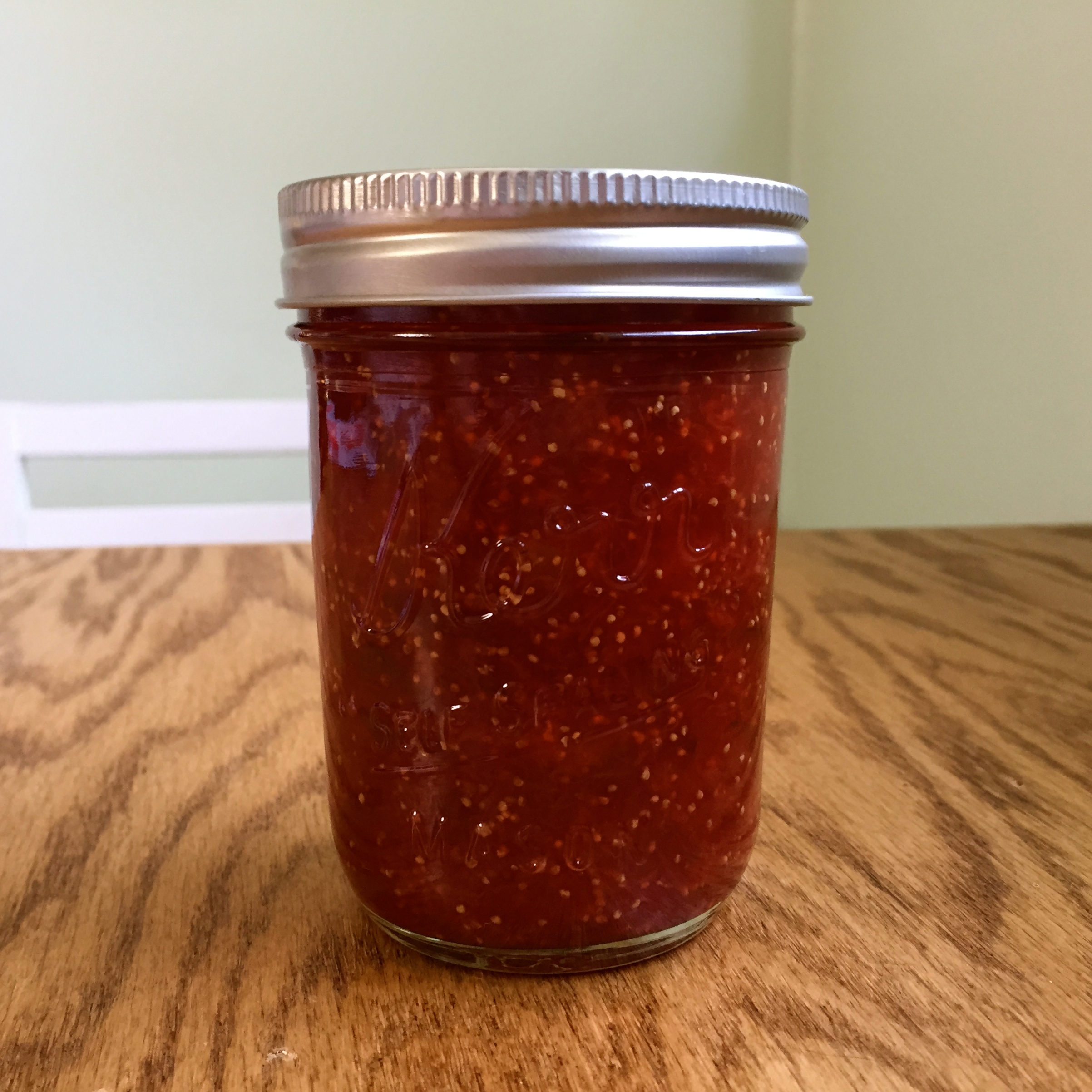
Ta-da! Strawberry fig jam. Such a pretty color.

It’s especially yummy on toast. Or scones, or croissants, you get the idea.
Here’s the recipe:
4 cups fresh ripe figs
1 (3 oz) package fruit-flavored gelatin
2 cups granulated sugar
Clean figs thoroughly by putting them in a clean sink or large bowl filled with water and wipe them by hand or with a damp cloth. Dry figs, remove stems and slice them in half (or into quarters if they’re large).
Place figs into a large pot on the stove and add 2 cups white sugar. Cook on medium-low until sugar dissolves. Then add gelatin and stir. Overly ripe figs will break down easily, if others are being stubborn mash them with a potato masher or hand blender if you want a less chunky jam. Boil mixture for 8-10 minutes.
Remove jam from heat and with a measuring cup or ladle carefully pour into sterilized jars. Hold the jar with an oven mitt, the jam is HOT and will burn if it spills on your hand. Fill the jars with a quarter to half inch allowance at the top. Wipe rims of jars with a damp cloth to remove any spilled jam. Then place sterilized lids on top and screw on the rings.
Jar lids will “pop!” when they have sealed. Boil the jars only if you intend to store the jam for longer than a few months. Store jars in the fridge or in a cool, dark place.
Makes enough for 6 half-pint jars.
We doubled my grandma’s recipe because I had about 8 cups of figs and ended up with enough jam for 13 half-pint jars.
To sterilize jars you need to wash and dry them (unless they’re from a brand new case, just rinse and dry them), arrange them upright in a baking pan or rimmed sheet and bake them in a 225 degree oven for 20 minutes. Turn off the heat but leave the jars in the oven until you’re ready to fill them. To sterilize the lids put them into a large heatproof bowl and pour boiling water over them to cover. Let them sit for 5-10 minutes.
It’s very important that after you fill the jars you wipe the rims with a damp cloth to remove any spilled jam. If there’s jam in the threads the lid won’t seal properly. We didn’t boil our jars afterward, my grandma said we didn’t need to. I left them all packed close together in the case the jars came in and soon enough the lids popped, signifying they had sealed. If you want to store them for significantly longer than a few months I would recommend boiling them. Otherwise it’s not necessary.
 curious as a cat